Quick Summary
She Started With ₹20,000 and a Backyard Oven. Today, McDonald’s Can’t Function in India Without Her.
The story of Rajni Bector, founder of Mrs. Bector’s Food Specialities and how a home kitchen in Ludhiana became a ₹6,681 crore empire that feeds the world.
There’s a bun inside every McDonald’s burger sold in India. Soft, perfectly shaped, slightly golden on top. You’ve eaten it a hundred times without a second thought. But here’s what nobody mentions at the counter, that bun comes from a company built by Rajni Bector, a woman who started with ₹20,000 and a backyard oven in Ludhiana. Not a garage in Silicon Valley. A backyard in Ludhiana. And that’s exactly what makes this story worth telling.
Rajni was born in Karachi and grew up in Lahore. Then Partition happened. Her family, like millions of others, left with whatever they could carry and rebuilt in Punjab. She married at 17. Life settled into what it was supposed to look like, home, family, kitchen. Nothing about that picture hinted at what was coming. But Rajni could cook. the kind of well where people genuinely can’t stop talking about it. Word spreads through Ludhiana the way it only does when something is undeniably good. Friends told friends. A neighbour brought a neighbour. Before long she was catering to local events, weddings, and big gatherings. Brijmohan Munjal of Hero MotoCorp once told her, “Rajni, you’ve introduced Ludhiana to good food.” The local MP asked her to cook for 2,000 people. She did it with two helpers and zero drama.
At some point, she looked around and thought, okay. Let’s actually do this.
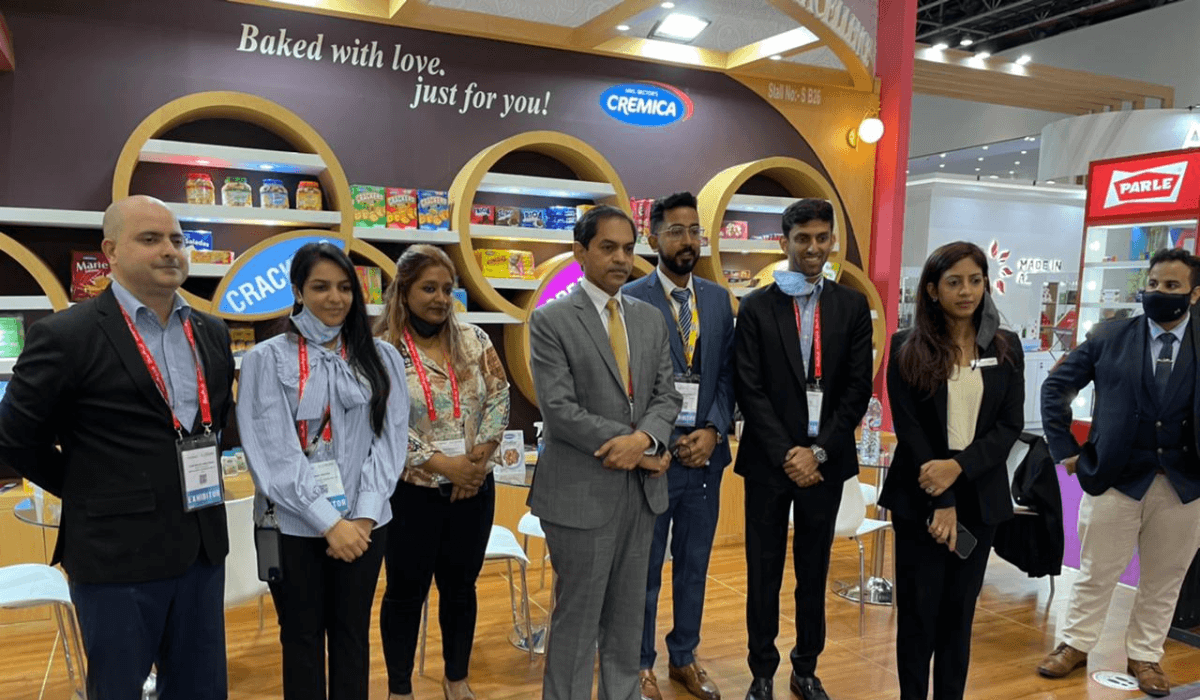
She put ₹300 into a proper oven and an ice cream churner, set it up in her backyard, and started producing properly. Then with ₹20,000 in capital, she and her husband Dharamvir formally launched what would eventually become Mrs. Bector’s Food Specialities. The biscuit brand they built was called Cremica. Ludhiana loved it immediately. Through the 80s the business grew quietly and steadily. Then Punjab went through one of its hardest periods, terrorism, tension, trade disruption. The Bector family had older businesses in fertilizers and food grains that had run for a century. They made a call that must have felt enormous at the time: shut those down, and go all in on the baking company. All in on what Rajni had built from that backyard. It was the right call. Obviously. But you only know that in hindsight.
Then 1995 happened, and everything changed.
McDonald’s was entering India for the first time. Massive brand, obsessive quality standards, zero room for inconsistency. They needed a local supplier who could produce their buns: same texture, same size, same softness, every single day, at scale. They looked across the country and picked Cremica. A company that had started with a woman and a ₹300 oven less than two decades earlier.
Think about that for a second.
Once McDonald’s was on board, it was like a door swung wide open. Subway came. Then KFC, Domino’s, Burger King, Yum! Brands. Today the entire QSR ecosystem in India runs significantly on Mrs. Bector’s supply chain. Their English Oven brand makes 1.2 million buns a day. That’s not a typo. Every. Single. Day.
Through all of this growth, new plants in Greater Noida, Mumbai, Himachal Pradesh, Maharashtra, the quality never slipped. That part is actually harder than it sounds. A lot of food companies scale fast and spend years fixing what broke on the way up. Mrs. Bector’s didn’t do that. Revenue crossed ₹100 crore by 2006. Goldman Sachs picked up a 10% stake. By 2011-12 they were doing over ₹650 crore a year. The sons joined the business and pushed it further. But Rajni stayed involved in recipes, because some things you just don’t hand off to someone else.
Today the company exports to 64 countries across 6 continents. Cremica has 384 products sold through more than 550,000 outlets across India. When they went public in December 2020, the IPO was oversubscribed 198 times. The market cap has touched ₹6,681 crore.
When APJ Abdul Kalam presented her with an award in 2005, he didn’t call her a founder or an entrepreneur. He called her “the ice cream lady.” The woman who started by making ice cream by hand for her neighbours. That reportedly got to her more than the award itself. In 2021, the Government of India gave her the Padma Shri.
Rajni Bector didn’t start because she read a market report or identified an underserved category. She started because she loved to cook and people couldn’t get enough of it. No pitch deck, no angel investor, no co-founder with a Stanford degree. Just ₹300, a real skill, and a neighbourhood that kept showing up. She built all of this in a time when the phrase “women entrepreneur” barely existed in India. She did it after losing a home to Partition. She did it from a city that nobody outside Punjab was paying attention to.
And when the world’s biggest fast food chain came to India and needed someone they could trust with the most basic part of their product, the bread, the bun, the thing that holds everything together. they found her in Ludhiana. The bun in your McDonald’s burger isn’t just bread. It’s what happens when someone refuses to think small about a backyard kitchen.
Quick Share