“The large part of the third wave coffee journey is not so much about coffee cup, but it is about how does the partner serving you coffee, treats you”
– Sushant, Goyal, founder and former CEO.
When i first stepped into Bangalore, all I was craving to try was a filter kappi but when i asked on of my fellow passenger to suggest me some place for kappi he did suggested ramaeshwarm but one thing he said that shook me was his go to stop was not for Rameshwaram or Udupi but was third wave coffee
I remember he said “if you want to experience coffee try Third Wave; it uses Indian coffee beans and give you ultimate experience of coffee”
When I entered Bangalore, I thought i will see road filled with Rameshwaram cafes or filter kappi stations, but something else catch my eyes when i going from the airport to my destination that was again Third Wave Coffee and a question that started to arise in my mind was how kappi changed to coffee.
Over the years kappi was simple, you drank it and stayed awake. You order it without asking questions. You didn’t care where it came from as long as it worked, and then somewhere in the way coffee became complicated. It became more about experience and not just about coffee,
Then, the conversation shifted to origin stories, tasting notes, brewing techniques, and long discussions that sometimes felt more like lectures. The room was filled with a mix of excitement and fear.
For instance ,you enter a cafe and the fear of not understanding what to order so many unfamiliar names with words that you have not heard before and it brings up a feeling to not go to that place again. This has always been the fear of common kappi or instant coffee drinkers.
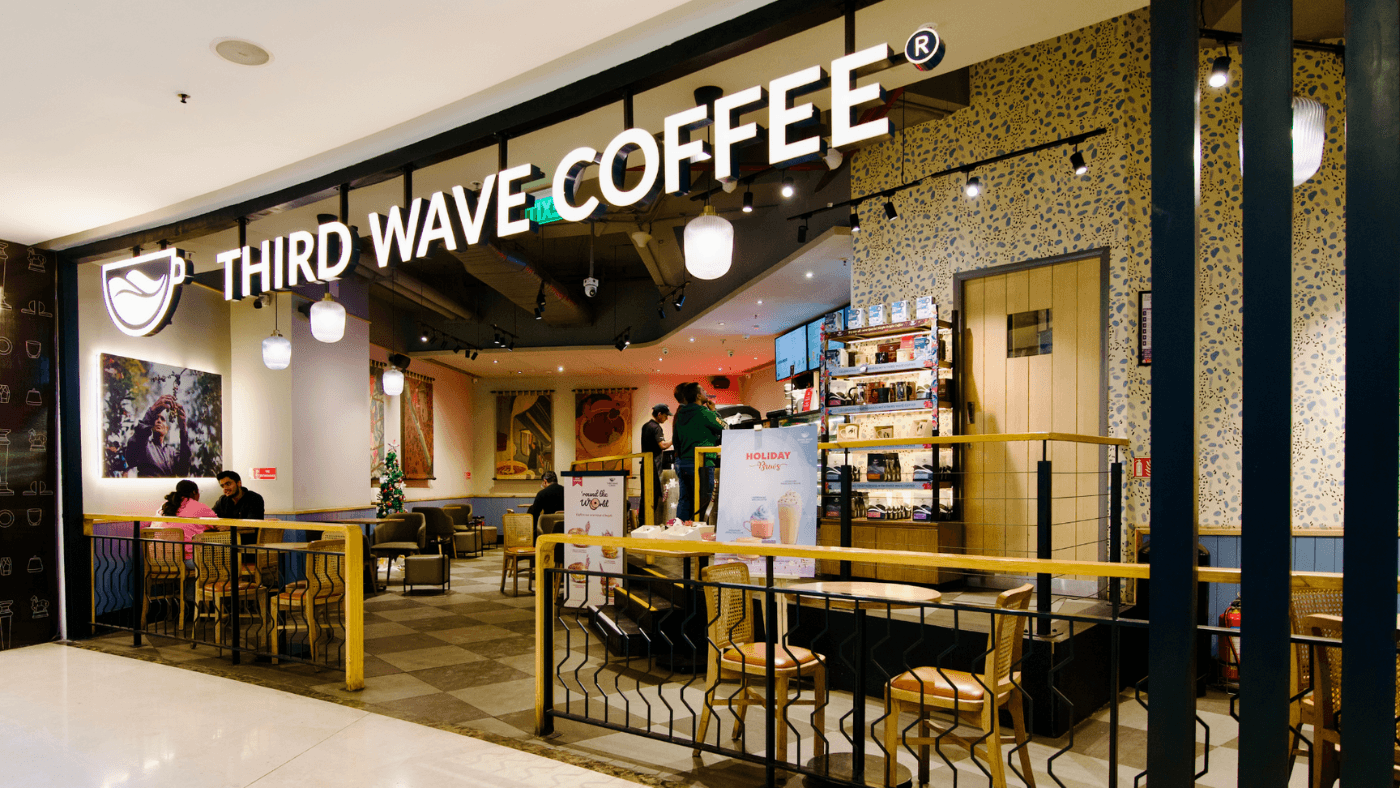
The founders, driven by a passion for coffee and a desire to break free from the chains of conventional café culture, embarked on this exciting journey. They chose to use Indian beans from Karnataka, nurturing a brand that celebrated education, community, and storytelling. Their coffee cafés have evolved into colorful coffee labs that include roaster workshops and brewery techniques, and everyone is invited to look into the art of coffee-making.
However, it was not just about the coffee, it was about creating a space to connect as one does when they are having a cup of tea with friends or at work or college when they take a tea break and socialize. The aim was to form a community that would prosper on word-of-mouth recommendations, a place to just hang out and feel comfortable.
An essential part of this process involves designing our Indian coffee route, allowing us to be connected to our roots and culture. Therefore, by obtaining the coffee directly from the farms, they were able to create a sense of luxury for the consumers, which connected very well with them. For them, every coffee drink was a story.
The Three-Wave Journey of Coffee Consumption
The history of the development of coffee may be described in terms of three waves with differing characteristics.
The First Wave: Convenience First
The first wave had accessibility as a dominant feature. With instant coffee, mass production, and supermarket shelves, coffee became a ubiquitous fuel. Affordability and speed were the main considerations, and quality was a secondary factor.
The Second Wave: Experience Becomes Central
The second wave also created the café society. The chain coffee houses made coffee aspirational, and the coffee drink, espresso, as well as coffee-flavored syrup, is now mainstream. Coffee is not just being consumed, it is now being experienced.
The Third Wave: Craftsmanship and Respect
The third wave transformed coffee from something just consumed to something crafted. Farmers were acknowledged, and coffee beans had names, regions, and altitudes. There was precision in brewing, and baristas became professionals, not just waiters. Coffee was talked about like wine.
At its core, Third Wave was never about complexity. It was, and is, about respect for the bean, for the farmer, and for the process.
The path has also been beset with challenges. For instance, Third Wave Coffee has experienced financial losses as their net losses widened to ₹110 crore during FY24 despite a 67% jump in revenues to ₹241.3 crore; high operating costs and rents being just a few issues they faced.
As a response to this situation, they took strategic steps by appointing Rajat as the new CEO, whose expertise lies in growing the food retail business at KFC. They installed a new facility, reducing costs by 10% in outsourced costs. They ventured into smaller tier-two cities with lower operational costs and increased focus on quick commerce in an attempt to enhance profitability by 2026.
This growth was remarkable. Also, by mid-2025, Third Wave Coffee had 165 cafes across India; this was more than the planned 150 cafes across the country. By late 2025 or early 2026, Third Wave Coffee had opened their 200th café in Mumbai and had planned to establish 100 more cafes by 2026,this would bring them to 300 cafes across the country. This would be a 21% rise for them, which shows dedication and foresight.
So, in essence, the story of Third Wave Coffee can be seen as a personal story of passion, perseverance, and the dream of crafting a coffee culture that is uniquely Indian, one that essentially binds people together and tells a story in each cup.
Quick Share