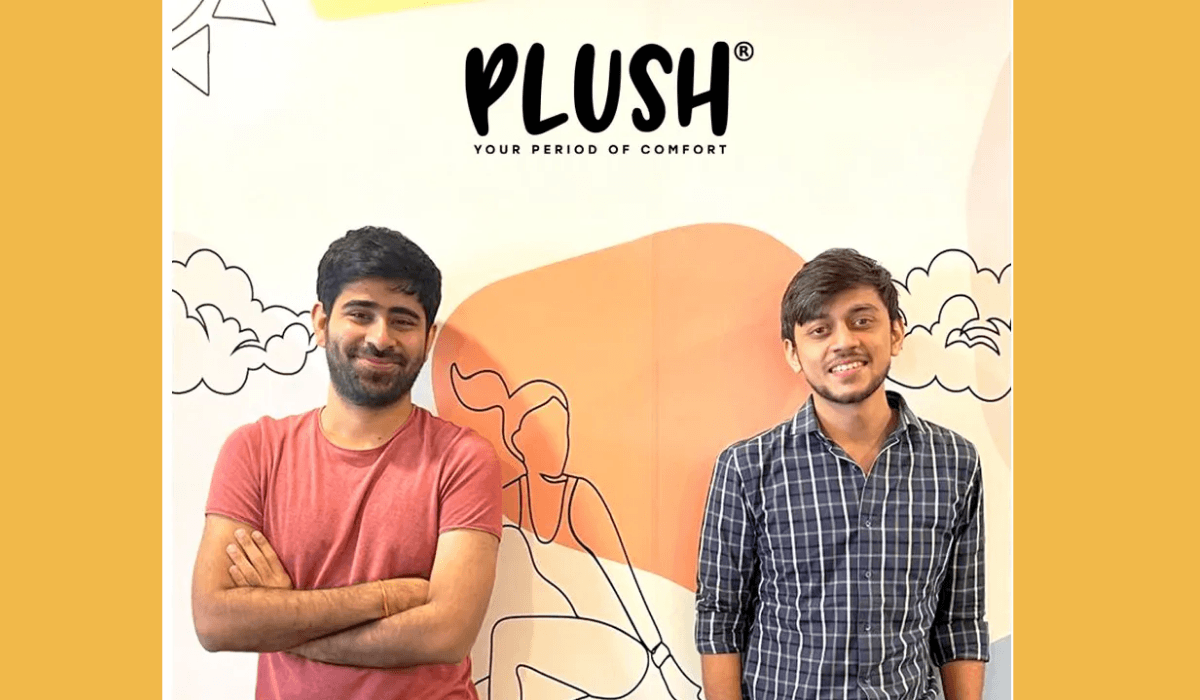
• Founded in 2019 by college friends Prince Kapoor and Ketan Munoth after spotting a glaring lack of choice and innovation in India's period care aisle
• Built a clean, cotton-first feminine care brand around the unspoken problem of period rashes backed by a bold 100% rash-free money-back guarantee
• Started as a D2C brand from Chennai and grew into one of India's fastest-growing femme care brands, reaching a net ARR of ₹100 crore and raising ₹66 crore in total funding
For decades, India's femme care shelves told the same story. Two legacy brands, decades old, had divided an entire category between themselves. For every Whisper, there was essentially only Stayfree. No real competition. No meaningful innovation. And no one is asking whether the available products were actually good enough.
Prince Kapoor and Ketan Munoth were not looking to start a brand. They were doing what they had always done as friends, walking through supermarket aisles, playfully analysing brands and products across categories. That habit had started back at Loyola College in Chennai, where the two had even launched a small online gifting venture together during their BBA days. Then they turned into the women's hygiene aisle.
Beverages, snacks, and personal care, every category around them had multiple competing brands, giving consumers real choices. But in period care, the shelves were almost identical to what they had looked like twenty years ago. That single observation became the trigger that changed everything.
After that moment in the supermarket, the two founders did not rush into building a product. They went deeper. They spoke to a large number of women, not just about which pads they used, but about how those products actually made them feel. What they heard was something the industry had quietly ignored for years.
Rashes were common. Discomfort was considered normal. The plastic-heavy synthetic materials used in most pads had never seriously been questioned. Women had simply accepted that menstruation came with irritation alongside everything else. Around 70% of menstruators in India experienced period rashes, yet not a single mainstream brand had treated this as a problem worth solving from the ground up.
At the same time, the category had almost no real brand identity. Period care was clinical, transactional, and whispered about. The packaging was plain. The communication was functional at best. There was no warmth, no community, and no brand that spoke openly about menstrual health without awkwardness.
Prince and Ketan saw both problems clearly — a product problem and a cultural problem. Plush became their answer to both.
The two founders brought very different experiences to the table. Prince had worked as an investment banker at Spark Capital after his BBA. Ketan had completed an MBA from NMIMS and moved to Delhi to work at Hindustan Times. Neither had any background in product manufacturing, feminine care, or consumer FMCG. And crucially, neither was the target audience for the product they were trying to build.
"For starters, we weren't the target audience for the product, so we would have women test our product as we kept iterating on it," Prince explained.
That made everything harder and slower. Product testing was tied directly to the menstrual cycle, giving the founders a roughly 45-day gap between each round of feedback. Five full iterations went into the final product before they felt confident enough to launch. The process alone took more than 11 months — visiting global suppliers, mapping an unfamiliar supply chain, and testing multiple material variants with around forty women.
Manufacturing brought its own complications. Plush designed its products entirely in-house and partnered with third-party contract manufacturers in India and overseas for assembly, while importing raw cotton from the United States. Building and managing an international supply chain as a small early-stage startup from Chennai — far from India's FMCG manufacturing hubs — was demanding, expensive, and unglamorous work.
And beyond the product, there was the cultural barrier. Period care was still spoken about in hushed tones across much of India. Convincing women to switch from the brands they had used their entire lives, and convincing retailers to stock a challenger brand in a category owned by two legacy giants, required patience and persistence in equal measure.
The timing of Plush's arrival quietly aligned with a growing frustration among Indian women. A younger generation was becoming more vocal about the products they used, more ingredient-aware, and less willing to silently accept discomfort as part of their period experience. They were reading reviews online, talking to friends, and starting to ask questions that older brands had never bothered to answer.
Plush stepped directly into that moment. The product was made from 100% pure US cotton — no plastic, no harsh chemicals, no added fragrances. It was cruelty-free, certified by Cotton USA, Seal of Cotton, PETA, and FSC. And it came with something no brand in the category had ever offered before: a 100% rash-free or money-back guarantee, no questions asked.
That guarantee was not a marketing gimmick. It was a commitment that forced the brand to stand fully behind its product. And it worked. Women who had spent years normalising period rashes tried Plush, felt the difference, and told others. Someone in a college hostel shared it with her roommate. Someone at a corporate job kept a pack in her desk drawer. Someone experiencing rashes for years finally found a product that solved the problem.
That quiet, personal word-of-mouth became one of the brand's most powerful growth engines.
Most period care brands had never thought of packaging as anything more than functional. Products were wrapped in plain plastic, slid into paper boxes, and expected to disappear into black bags at the medical counter.
Plush approached packaging differently from the start. The brand used 100% recycled paper boxes — a deliberate sustainability choice in a category responsible for 113,000 tonnes of plastic waste in India every year. The design was modern and unashamed, featuring real women and real stories rather than blue liquid demonstrations and abstract comfort claims.
"From a branding perspective, we focus on authentic representation. We avoid unrealistic messaging and instead reflect real women's experiences. Even our packaging features women and their stories," explained Prince.
That visual honesty made Plush feel different on the shelf and online. It was not trying to hide what it was. It was trying to make something people had always rushed past into something they could feel good about buying.
Unlike legacy brands that relied on television advertising and pharmacy shelf dominance, Plush built its early growth on something harder to replicate: genuine product results and consumer trust.
The brand launched primarily as a D2C brand, available through its own website, Amazon, Nykaa, and select offline retailers including More, Health & Glow, and Namdhari's. It also built a community called BloodSisters — an initiative designed to normalise open conversations about menstrual health, break the stigma around period care, and create a space where women felt genuinely represented rather than just targeted.
Plush also partnered with organisations supporting breast cancer awareness, donated pads to women affected by the floods in Kashmir, and created limited edition packaging to educate consumers about transgender communities that menstruate. These were not one-off PR exercises. They reflected a brand that had built its identity around standing for something bigger than selling a product.
The result was a consumer base that returned not just for the product, but for what the brand meant to them.
From a single-product period care brand launched out of conviction in Chennai, Plush has grown into a full-spectrum feminine wellness brand. It now offers products across period care, intimate wellness, hair removal, and skincare. Over 80% of the team is made up of women — a reflection of the community the brand was always built around.
The company has raised a total of ₹66 crore, with its most recent ₹40 crore round led by Rahul Garg and backed by Blume Founders Fund, OTP Ventures, Careernet, the Patni Family Office, and other strategic investors. It currently operates at a net ARR of ₹100 crore and achieved EBITDA-level profitability — a rare milestone in India's D2C ecosystem. The brand is now targeting ₹200 crore in its next phase of growth and is actively working to localise its manufacturing in India to reduce dependence on imported supply chains.
started because two friends walked through a supermarket and asked a question the industry had long stopped asking: why don't women deserve better?
That question drove eleven months of product research, five iterations of real-consumer testing, a money-back guarantee, recycled packaging, and a community built around making menstrual health something people could talk about openly. Prince and Ketan built it without industry experience, without being the target audience, and from a city that no one expected a femme care brand to come from.
They made the brand by listening — carefully, consistently, and without assuming they already had the answers.
And sometimes, the most powerful brands are simply the ones built by people who were willing to ask better questions, and stubborn enough to keep going until they found real answers.
Quick Share