There is a moment in every hiring call that nobody talks about. It comes after the resume has been shortlisted, after the job description has been read three times, and after the recruiter has already spoken to twenty-two other candidates that day. The phone rings. The candidate picks up. And in the next five minutes, a decision gets made that could define the next five years of someone’s career, based on nothing more than a gut feeling, a nervous voice, and a regional accent that the recruiter may or may not have heard before.
click here to view the hyring official video
This is the moment Adithyan RK could not stop thinking about.
Long before there was a product, there was a kid in Chennai who could not see the point of waiting.
At fifteen, while most of his peers were navigating textbooks and tuition centres, Adithyan was already building something. Not a school project. Not a side hobby. A real company. What started as an experiment became Domaincer , a digital agency that has been running for 18 years and employs over 50 people across mobile development, cybersecurity, and digital marketing. He is today a member of both the Forbes HR and Technology Council , a recognition that traces back not to academic credentials, but to nearly two decades of building in the field.
He did not go through the conventional route of college to corporate to startup. He skipped straight to building, and the education he got was the kind you can only earn by doing and hiring the wrong people. Losing great candidates to a broken process. Watching the same mistakes repeat themselves at scale, year after year.
Nearly two decades of that will do something to a person. It gives you a very specific kind of frustration. Not the abstract frustration of someone who has read about a problem in a report. The particular frustration of someone who has lived it, over and over, and cannot understand why nobody has fixed it yet. That frustration became Hyring .
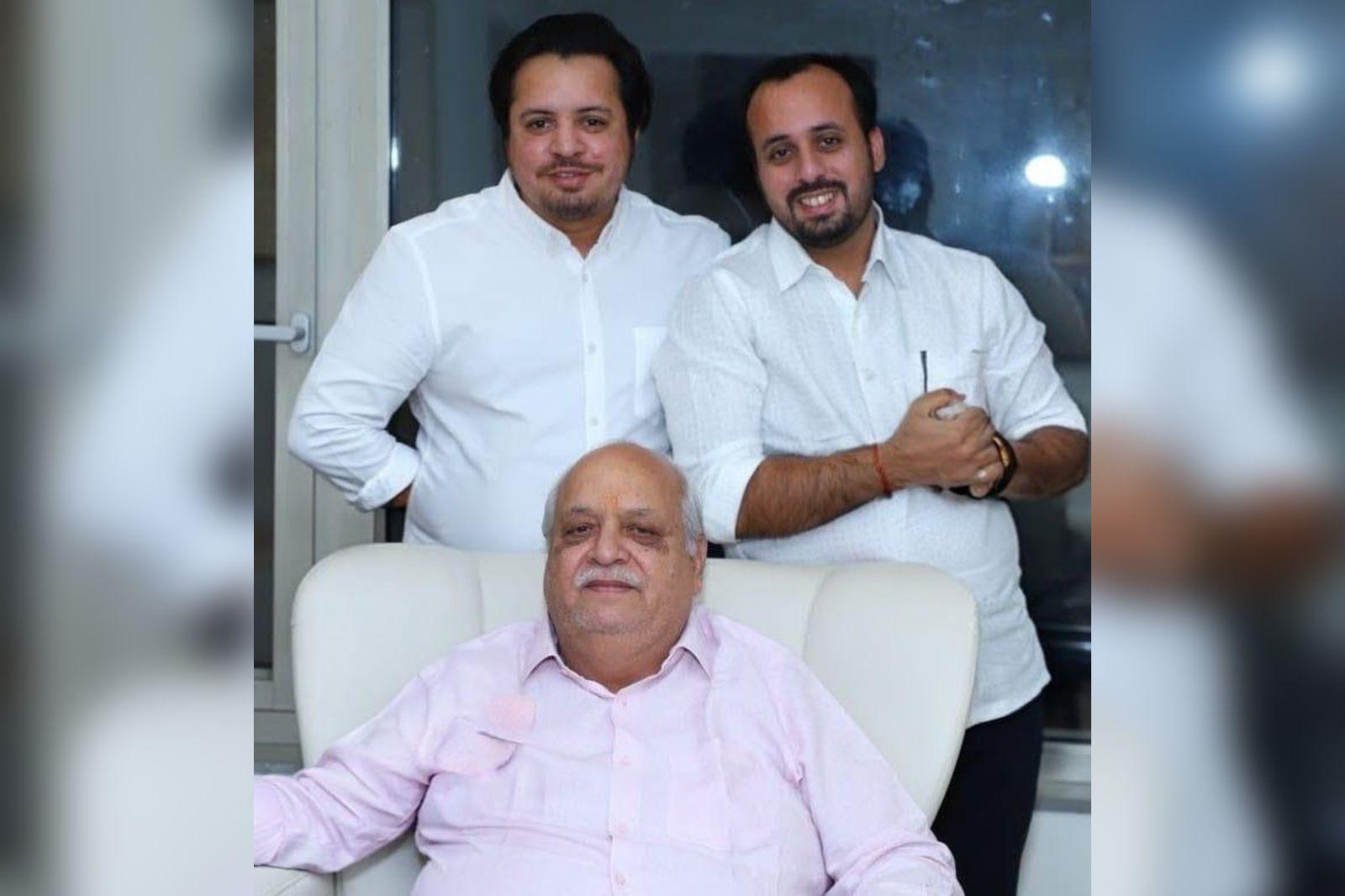
Every builder needs someone who can see how the pieces fit together. Surya Nagarajan, Hyring’s co-founder, is a mechanical engineer by training with a deep obsession for artificial intelligence that had been quietly building for years. Inside Domaincer, he had already been developing AI-based applications long before the technology became a dinner table conversation. He understood, at a technical level, what AI could actually do versus what people assumed it could do.
When Adithyan came to him with the idea, it was not a pitch in the traditional sense. It was more of a shared diagnosis. Recruitment is broken. The tools people use to evaluate candidates are embarrassingly primitive. What if we built something that could actually think, adapt, and assess the way a skilled human interviewer does, but at a scale no human team could ever match?
Surya did not just see a product. He saw a system. One that could eliminate the fatigue, the bias, and the inconsistency that come with asking the same questions for the hundredth time that week.
In 2024, they launched Hyring together with a clear belief: recruitment is not broken because of a lack of candidates. It is broken because the tools used to evaluate them have not kept up.
India ranks 69th globally on the 2024 EF English Proficiency Index, with a score of 490, placing it in the low proficiency band. The Pearson Global English Proficiency Report 2024 puts India’s overall English skills score at 52, below the global average of 57. And the Mercer-Mettl India Graduate Skill Index 2025 found that only 55.1% of Indian graduates are considered proficient in communication, which means nearly half the country’s talent pipeline enters the job market without the communication readiness that modern workplaces demand.
These are not abstract statistics. They are the background score of every hiring conversation happening right now in every office, startup, BPO, and GCC across the country.
An Aspiring Minds study of 30,000 engineers across 500-plus Indian colleges made the picture even sharper. Three-quarters of them do not possess the spoken English skills required for any job in the knowledge economy. A staggering 97% cannot speak English at the level required for high-end roles in corporate sales or business consulting. Over 51% of engineering graduates are not considered employable based on their spoken English scores alone.
The talent is there. The ability to communicate that talent is not. And the hiring system, built on phone screens and gut instincts, has no reliable way to tell the difference.
When Hyring had processed over 2.5 lakh interviews across India, the US, and Dubai, a pattern had become impossible to ignore.
Candidates were clearing every filter. Resume screened. Technical round passed. Coding test done. And then, somewhere between the shortlist and the offer letter, it would fall apart. Not because of skill. Not because of knowledge. Because of something nobody had thought to measure properly.
How well can this person actually communicate in English?
The macro data confirmed what Hyring was seeing on the ground. Overall graduate employability had dropped from 44.3% to 42.6% in a single year. But the decline was not coming from technical skills. Those were actually improving slightly. It was non-technical employability that had collapsed, from 48.3% to 43.5% in one year. India’s talent could code, build, and analyse. The system was failing to ensure they could say so out loud.
What companies had been relying on to catch this gap was a phone call. Five minutes. Maybe ten. A recruiter already exhausted from the day’s twentieth or thirtieth conversation making a snap judgment about confidence, clarity, and communication. Nervousness gets confused with a lack of ability. Regional accents get mistaken for poor English. And the entire assessment, one that could define a candidate’s career trajectory, happens without a single standard, a single scoring framework, or any way to compare one candidate’s communication skills against another’s.
Two kinds of expensive mistakes follow.
The first is the false reject. An exceptional engineer from a Tier 2 or Tier 3 city, technically brilliant, sounds hesitant on a call. Passed over. Lost. Gone into a system that could not see past the pause. With over 51% of engineering graduates deemed unemployable based on spoken English scores alone, the scale of talent being lost to this broken filter is enormous.
The second is the false accept. A candidate who interviews with polish and confidence gets hired. Three weeks into the role, the team realises the confidence does not carry over into client calls, written communication, or cross-functional collaboration. The hire fails. The process starts again. A Leadership IQ study found that 46% of newly hired employees fail within 18 months, and communication mismatches are among the leading causes. The US Department of Labour estimates a single bad hire can cost up to 30% of the employee’s first-year earnings . A separate study found that 65% of companies report that language barriers directly contribute to ineffectiveness, poor collaboration, and low productivity in the workplace.
This was the problem nobody had a clean answer for. Until now.
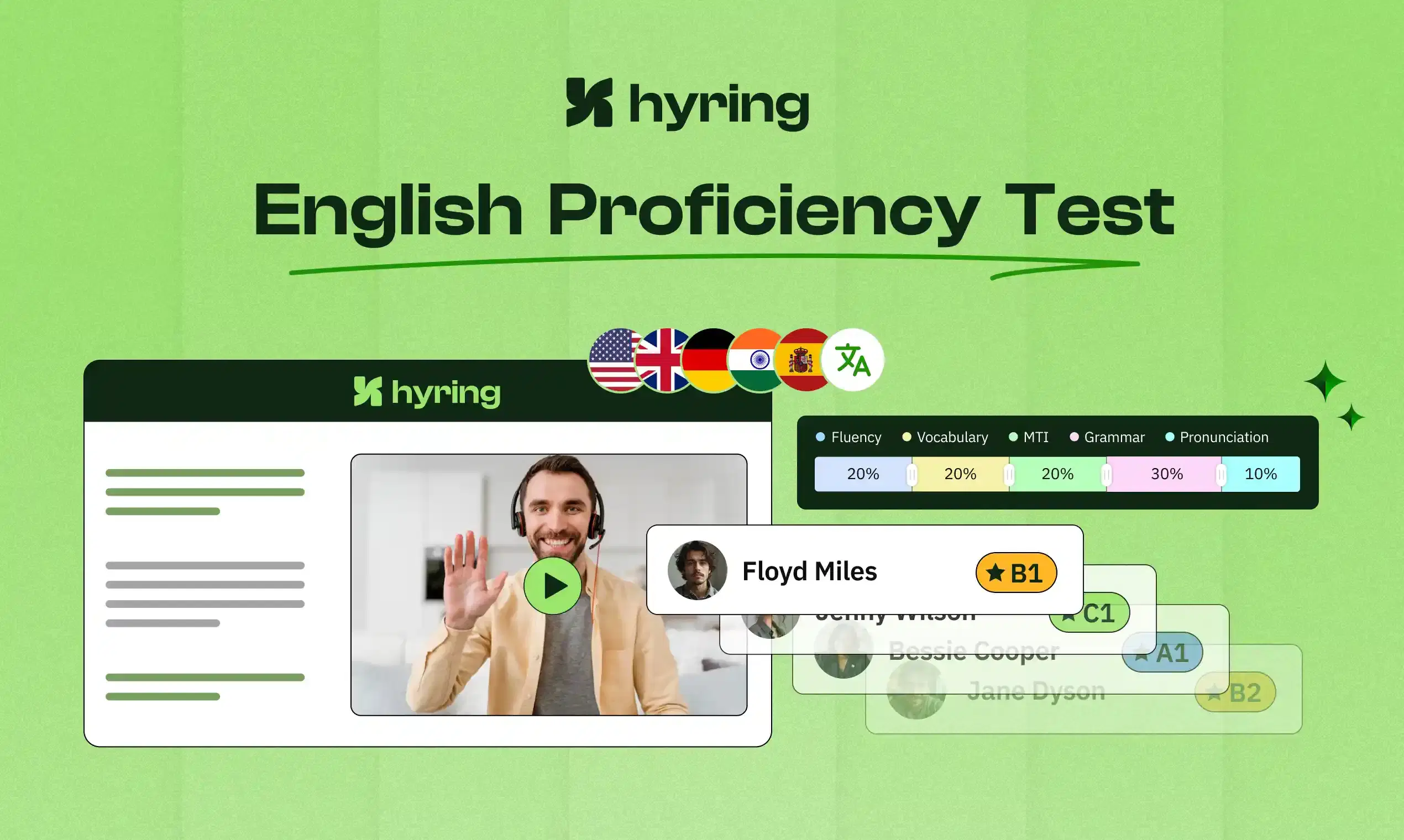
Hyring’s English Proficiency Test was not built as a generic language quiz borrowed from academia. It was built the way a craftsperson builds a tool, for a very specific job, with no unnecessary parts and no shortcuts. This is a purpose-built workplace English proficiency test designed to evaluate how effectively a candidate can communicate in a professional environment, not in an exam hall.
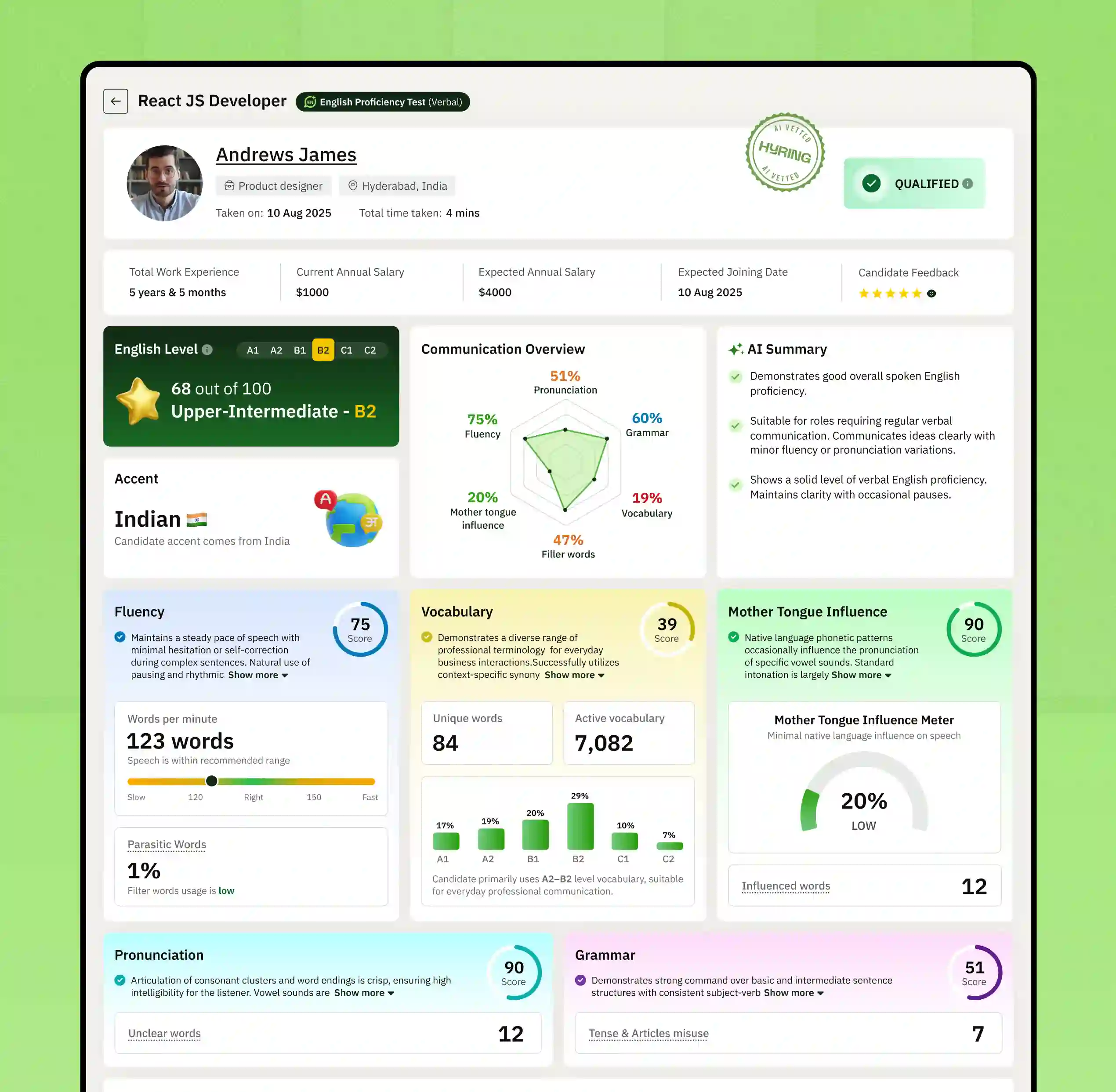
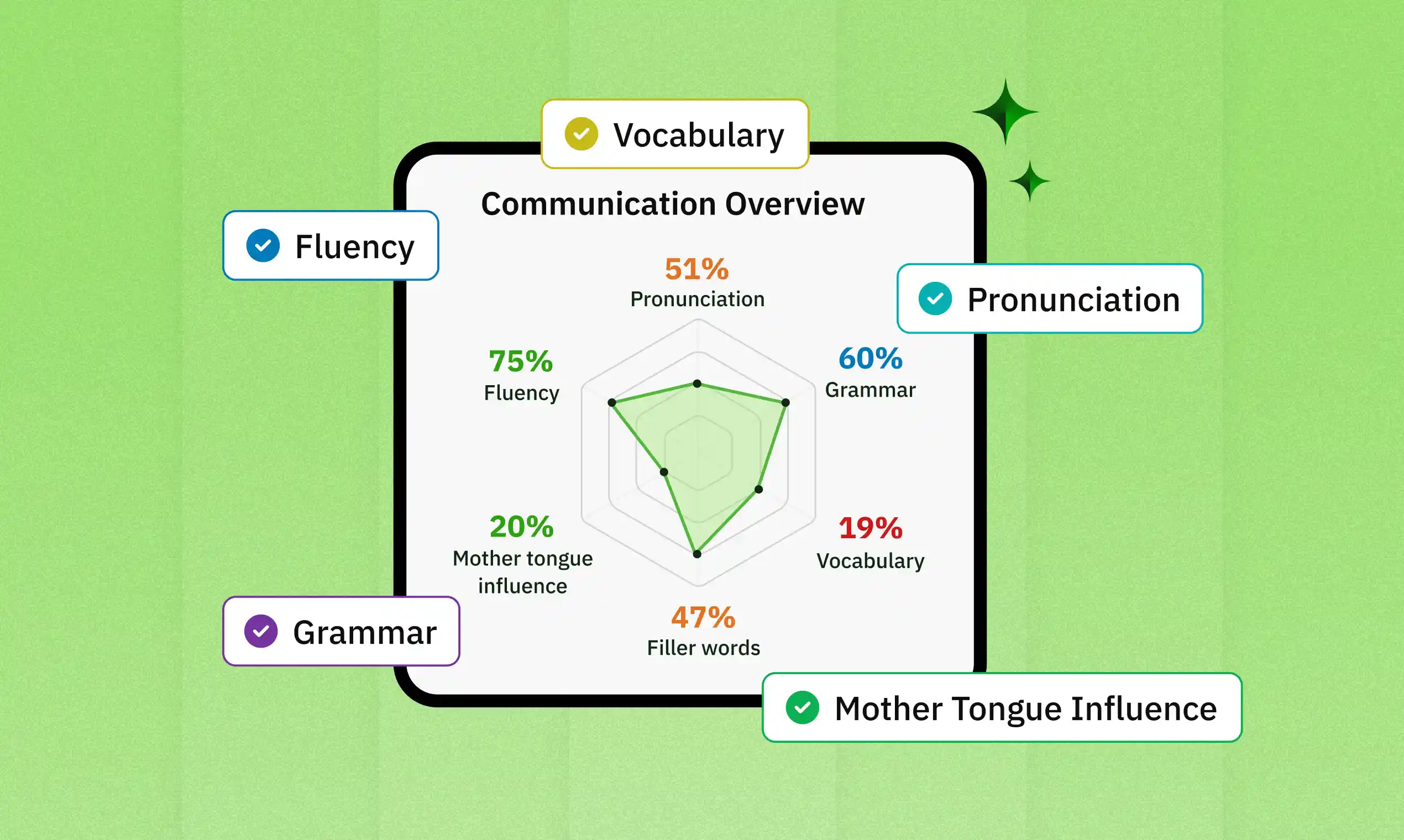
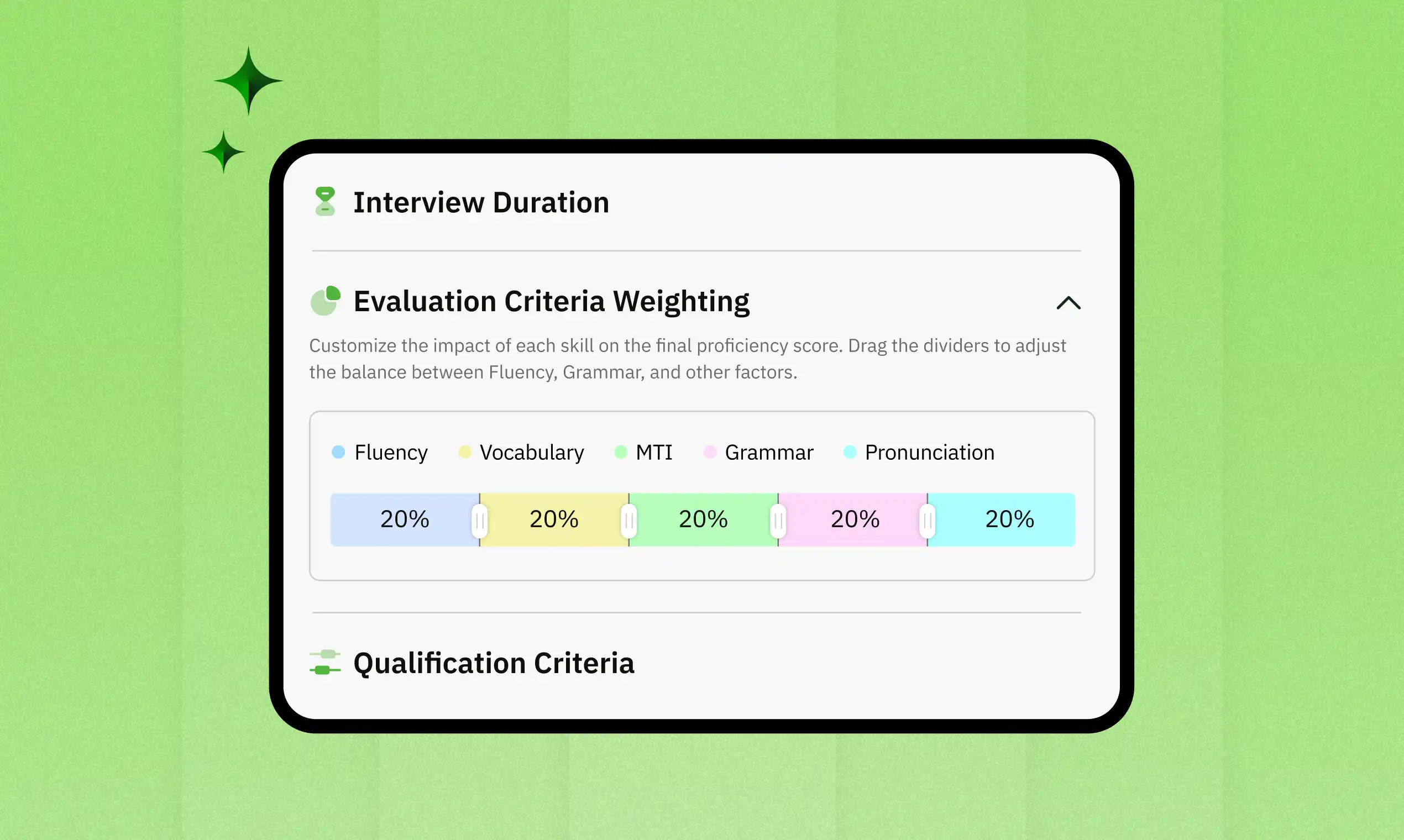
The EPT measures five dimensions of professional communication, each one chosen because it directly influences job performance.
Fluency
The ability to speak in connected, natural sentences without excessive pauses or filler words. The kind of communication that holds up in team standups, client presentations, and cross-functional discussions. Research shows that men who speak fluent English in India earn 34% higher hourly wages than those who do not. Candidates with English skills above the local average command 30 to 50% higher salaries than similarly qualified peers without those skills. Fluency is not just a soft skill. It is a career multiplier.
Vocabulary
Whether a candidate has the professional range to discuss timelines, escalate issues, explain technical concepts, and operate confidently in a business setting. With employability in non-technical roles dropping sharply from 48.3% in 2023 to 43.5% in 2024, the gap between technical knowledge and the language to express it has never been wider.
Grammar
How accurately sentences are constructed, because in a world of emails, documentation, and async communication, structural clarity is not optional. According to the Aspiring Minds study , 61% of Indian engineers possess grammar skills no better than a Class VII student, and 43% cannot write grammatically correct sentences in English, despite holding engineering degrees. When these graduates enter the workforce, the impact shows up in every email, every report, and every client interaction.
Pronunciation
This is not about eliminating accents, but about ensuring speech is clearly intelligible across geographies and team setups. The Pearson report noted that India’s average English speaking score of 57 actually exceeds the global average of 54, the potential is there, but it varies dramatically by region and background. The Aspiring Minds report confirmed that pronunciation and fluency are the two biggest barriers to effective spoken English among Indian engineers, and that only 6.8% can speak or respond spontaneously with proper sentence construction.
Mother Tongue Influence
The one dimension most assessments completely ignore. With approximately 26.5 crore English speakers in India, the vast majority using it as a second language, the degree to which a candidate’s first language shapes their English rhythm, intonation, and sentence structure can significantly impact how they are perceived in global teams. The EPT measures this not to penalise, but to give recruiters a complete and honest picture.
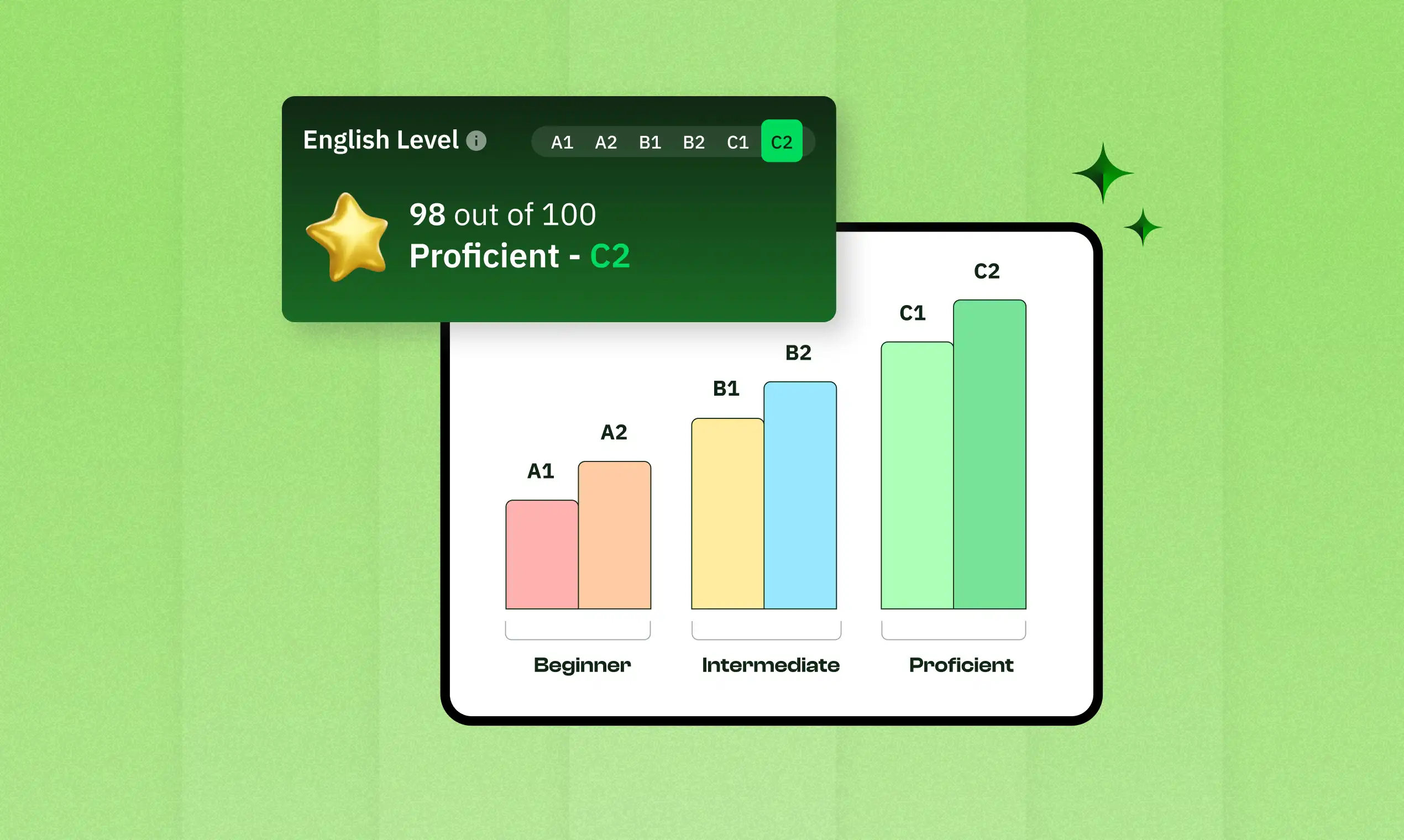
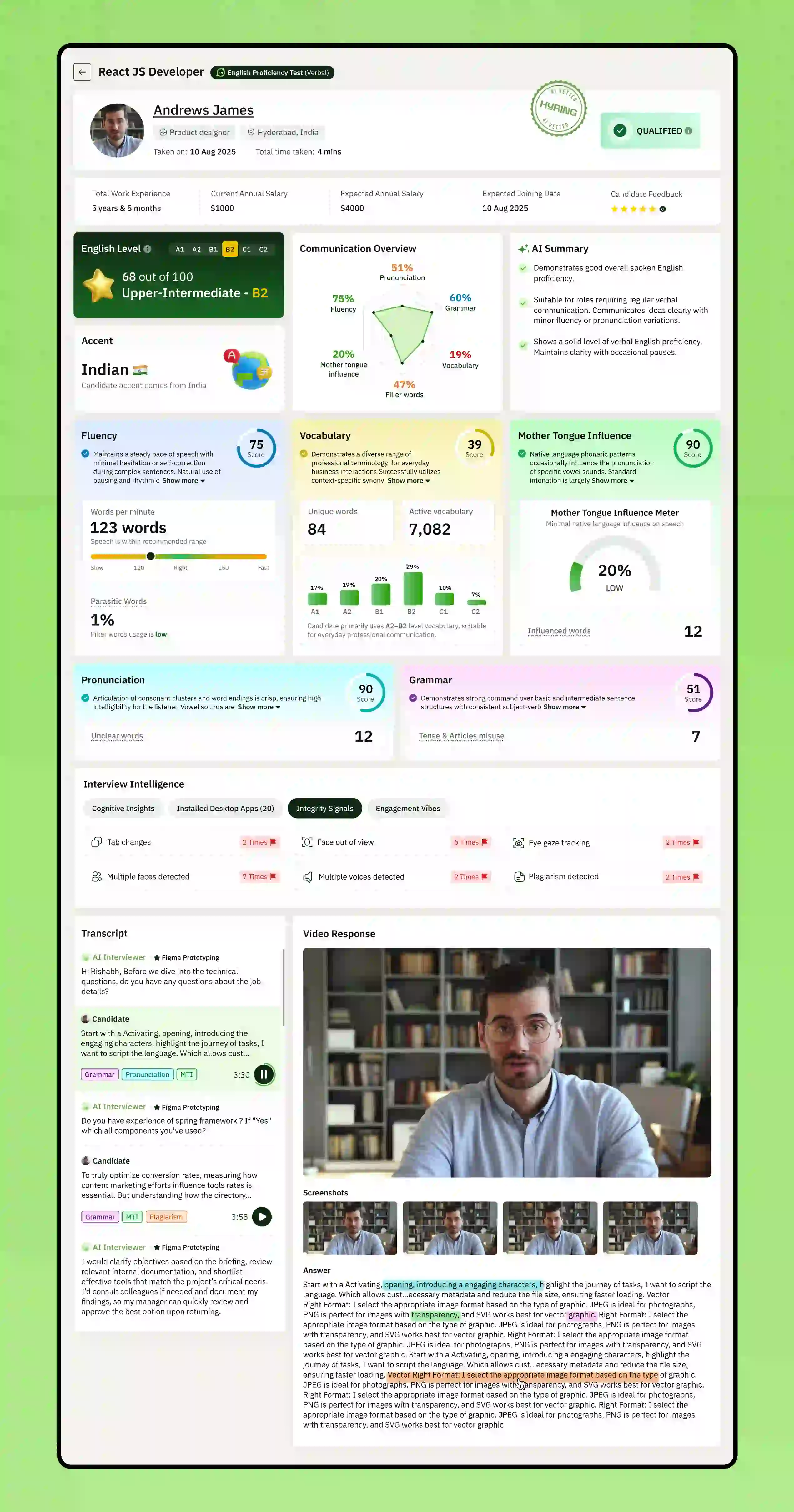
Every candidate is scored using the CEFR framework, the Common European Framework of Reference for Languages, rated from A1 (beginner) through C2 (proficient). This is the same globally recognised standard used by EF Education First’s proficiency index, which tracks 22 lakh test takers across 123 countries. What recruiters get is not a vague “good communicator” tag. It is a detailed, data-backed communication profile that can be compared across candidates, roles, and geographies with a consistency that a phone call could never deliver. All of this at a cost of roughly one dollar per assessment.
Before the product launched, something else arrived. A Rap.Not a product demo. Not a launch video with a founder talking to the camera. A rap-Carnatic fusion track that blended classical South Indian music with the raw, percussive energy of hip-hop. It was not what the HR tech space expected. It was exactly what the moment needed.
Because the lyrics did something that product releases rarely do. They told the truth.
They walked through the everyday reality of India’s hiring landscape. The candidate who carries all the right knowledge but stumbles the moment they have to articulate it under pressure. The recruiter is trapped in an endless cycle of screening calls that tell them everything about a person’s confidence but nothing about their actual communication ability. The entire system, quietly held together by tolerance and habit, was waiting for something better.
It landed differently because it said out loud what the recruitment industry had been quietly tolerating for years.
The EPT did not arrive alone. It arrived as the final piece in something Hyring had been building since day one.
Before the EPT existed, Hyring had already built a full suite of AI agents for HR that were transforming how companies handle early-stage hiring. An AI Video Interviewer . An AI Phone Screener . An AI Resume Screener . An AI Coding Interviewer . Together, these agents replace up to two full rounds of human interviews, handling the repetitive, time-intensive stages so that when a recruiter finally sits down with a candidate, they are not meeting a stranger. They are meeting someone who has already been assessed, scored, and understood across every dimension that matters.
The EPT now slots directly into this layer, adding English communication proficiency to the stack. For companies hiring at scale, BPOs, IT services firms, global capability centres, and SaaS companies building distributed teams, the result is a complete AI-powered pre-interview pipeline that leaves nothing to guesswork.
The impact is especially significant for organisations evaluating candidates for client-facing roles. When someone is being placed in a position that involves direct interaction with international clients, cross-functional collaboration with global teams, or customer-facing responsibilities, the cost of a communication mismatch is not just internal. It affects client relationships, deal outcomes, and brand perception. But the need is not limited to large enterprises. Startups building their first remote teams, mid-size companies expanding into international markets, and agencies placing candidates in client-facing roles all face the same challenge. Hyring’s workplace English proficiency test answers that question with data, not guesswork.
Over 5,000 HR teams are already using Hyring’s platform, including major organisations like IBM, TCS, Uber, Reliance, Meesho, Sobha, and Worldline. The traction speaks for itself.
This Is Not Just About Hiring. It Is About Fairness. It would be easy to frame this as a story about technology. About AI, automation, and the future of hiring. But at its core, this is a story about fairness.
A candidate who scores B1 on the CEFR framework is not being rejected from the workforce. They are being matched to roles where their current proficiency is a genuine fit, while C1-level roles go to candidates who can actually thrive there. Nobody gets set up to fail. Nobody gets placed somewhere that will expose a gap they were never told existed. That is not filtering. That is fairness, and it is a principle that runs through everything Hyring builds.
With the EPT now live, Hyring offers something no other AI recruitment automation platform in the space currently does: a complete AI-powered pre-interview layer, from resume analysis and technical evaluation to phone screening, video interviews, and now a dedicated English communication skills test, all before a human recruiter spends a single minute with a candidate.
Adithyan and Surya did not build Hyring because they wanted to replace recruiters. They built it because they wanted to make sure that when a recruiter finally picks up the phone or walks into an interview room, the person on the other side belongs there. Technically. Professionally. Communicatively.
The Rap out. The test is live. And the conversation about how India hires is only just beginning.
Quick Share