Backed by Bertelsmann India Investments, Rozana is rewriting the rules of rural e-commerce — one village at a time.
In a country where over 600,000 villages are scattered across every terrain imaginable — from the snow-fed plains of Uttar Pradesh to the red-earthed interiors of Rajasthan — a young startup called Rozana has just received one of the largest votes of confidence in rural e-commerce. The company has raised approximately ₹290 crore in a funding round led by Bertelsmann India Investments, sending a clear signal to India's startup ecosystem: the next big market is not Bengaluru, Mumbai, or Delhi — it is Bharat.
For years, India's e-commerce giants have mastered the art of speed in cities . Same-day deliveries, ten-minute grocery runs , and midnight order fulfilments have become the norm for urban consumers. But venture just a few hundred kilometres outside a metro and the story changes dramatically. In India's villages, modern commerce barely exists.
The barriers are well-documented and deeply structural:
For platforms like Amazon or Flipkart , rural India was a market too difficult to crack at scale. The economics simply did not add up. So they did what most large corporations do with hard problems — they deferred.
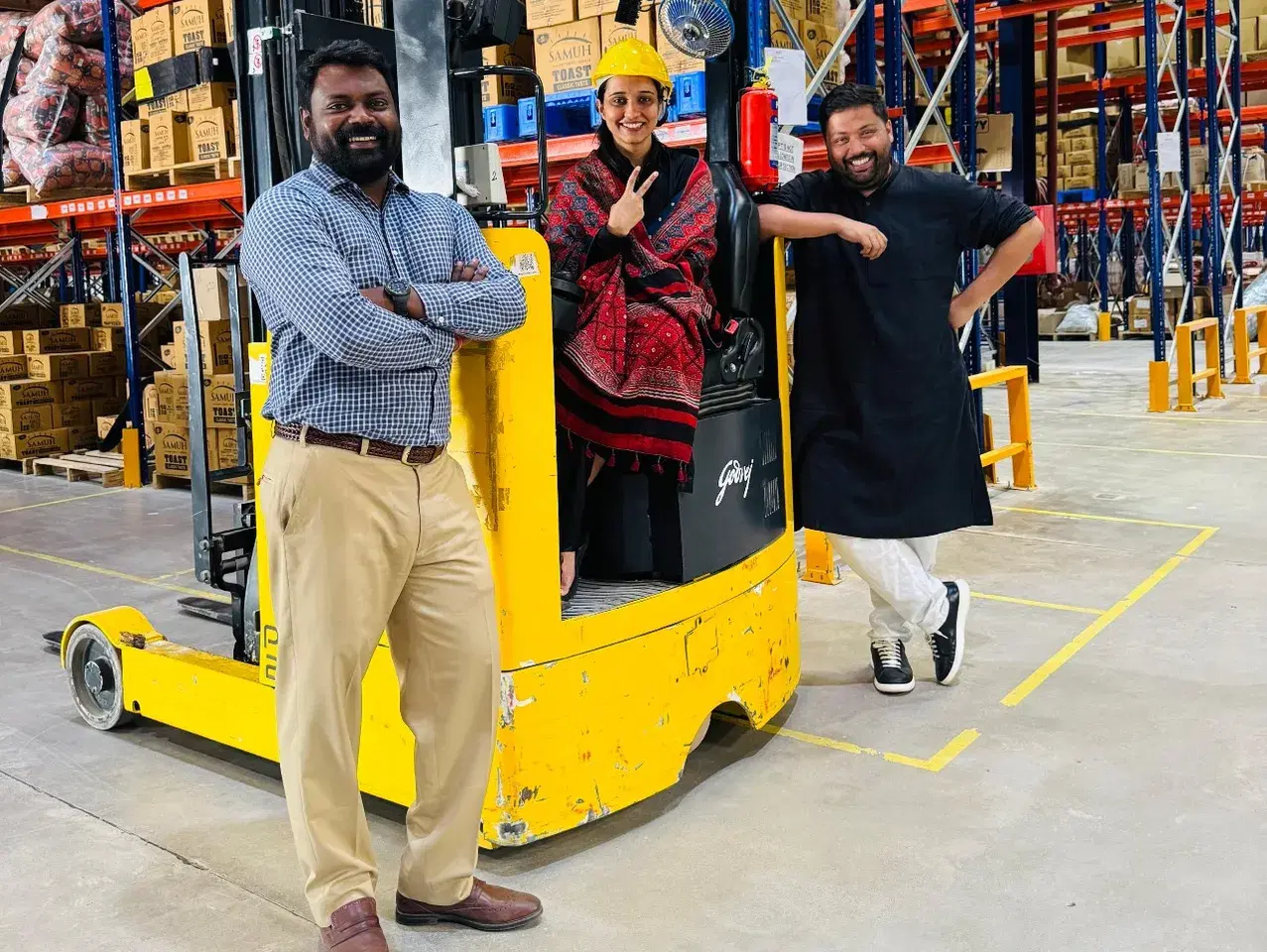
Rozana was founded in 2021 by Ankur Dahiya, Adwait Vikram Singh, Mukesh Christopher, and Prithvi Pal Singh — a team with deep roots in technology, consulting, and the startup world. Each of them had the professional pedigree to land comfortable, well-paying roles in India's corporate machinery. They chose otherwise.
The founding premise of Rozana was deceptively simple but commercially audacious: if modern logistics and technology can deliver groceries to a Bengaluru apartment in ten minutes, why should a family in rural Haryana or a shopkeeper in a village in Uttar Pradesh wait weeks — or never — for the same products?
It was a question that carried with it months of uncertainty, field visits across dusty backroads, and more than a few rejections from investors who dismissed rural commerce as economically unworkable. But the founders were not deterred.
Unlike urban startups that live and die by app downloads and social media virality, Rozana's early growth strategy was rooted in something far older: face-to-face trust. The founding team spent months on the ground across Uttar Pradesh and Haryana, sitting with small shopkeepers, speaking the local dialect, understanding the rhythms of village commerce.
What emerged from this fieldwork was not a traditional delivery network but a village-based commerce ecosystem. Rather than trying to replicate the urban logistics model in a rural setting — a strategy doomed to fail on unit economics — Rozana built a network of local entrepreneurs, trusted intermediaries embedded within the communities themselves.
These local partners serve multiple functions: they aggregate demand within their communities, manage last-mile fulfilment, and provide the kind of customer trust and vernacular communication that no centralized algorithm can replicate. It is, in essence, a model that places community infrastructure at the heart of commerce — not as an afterthought, but as the engine.
The ₹290 crore funding round, led by Bertelsmann India Investments, is one of the most significant bets on rural e-commerce in India's recent startup history. Bertelsmann India, the Indian arm of the German media and services giant, has a long track record of backing companies that target underserved or emerging markets in India — and Rozana fits that thesis precisely.
For Rozana, the capital injection is both a financial lifeline and a narrative milestone. It validates what the founders have been arguing since 2021 — that rural India is not a charity case or a CSR project, but a genuine, scalable, and underexplored commercial frontier.
The funds are expected to go towards expanding Rozana's village network, deepening its product catalogue, strengthening logistics infrastructure, and scaling its technology platform to handle the complexity of operating across hundreds of micro-markets simultaneously.
India's rural population is enormous — roughly 65 percent of the country lives outside cities. Yet the share of e-commerce transactions originating from rural areas has historically been a fraction of the national total. This is not a reflection of lacking demand; rural Indians are consumers too, with aspirations, preferences, and purchasing power that has grown steadily over the past decade.
The penetration of affordable smartphones, the expansion of digital payment infrastructure through UPI, and government investment in rural road connectivity have together created an inflection point. Rural India is more commercially accessible today than at any previous moment in history. The question is who will build the right model to serve it.
Rozana's founders believe they have that model. And with ₹290 crore now behind them, they have both the resources and the runway to prove it.
Rozana is not the first company to attempt rural commerce in India, and it will not be the last. But what sets it apart — at least in the eyes of its backers and its growing community of village entrepreneurs — is the depth of its ground-level understanding. This is not a startup that mapped villages on a spreadsheet from a co-working space in Bengaluru . It is a company built through boots-on-ground presence, relationship by relationship, village by village.
The startup ecosystem will be watching closely. If Rozana can turn this funding into sustainable, profitable growth across India's vast rural geography, it will not just be a successful company — it will be proof that the most overlooked markets in India are also its most promising.
Visit Karostartup for more insights into the intersection of technology, policy, and the future of India.
Quick Share