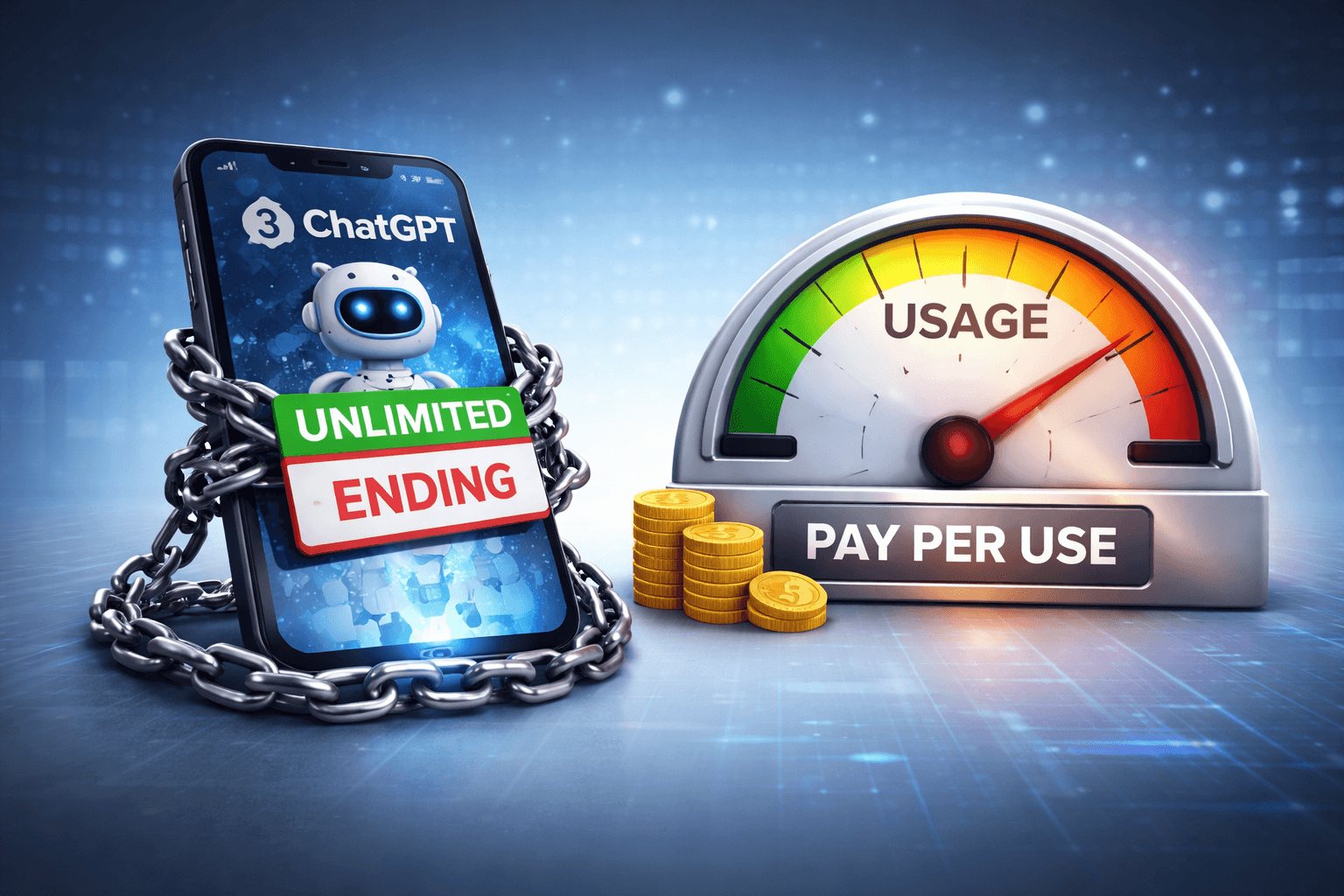
Turley said this in the Bg2 Pod podcast , when talking to Altimeter Partner Apoorv Agrawal, who said: "No one can tell me there is no world where pricing does not change in a big way when the technology is moving this fast. In his explanation of the OpenAI, he made an extreme analogy: he claimed that having a limitless plan is equal to having a limitless electricity plan in the present age. It just doesn't make sense." The analogy with electricity is calculated and full of color. It does not treat AI as a software product and offers it at a flat rate, but as a consumable resource that should be metered and charged on the basis.
Turley unveiled that the large language model of ChatGPT was initially released as a temporary demo which OpenAI had intended to close within a month. However, once it went viral and people started using it, the company soon understood that this was a real product that they had created and they added subscriptions as a way to deal with excessive demand. Turley called the model an accidental solution to capacity constraints, and said it was the result of stumbling into subscriptions . That is a very frank admission of one of the top executives, and it goes to show how fast OpenAI has been forced to adapt and how its pricing system was not originally created with the scale that the company has currently attained.
Currently, ChatGPT has 900 million weekly active users and 50 million paid users. The months of January and February 2026 were projected to be the biggest months due to the number of new subscribers joining OpenAI. That booming expansion is what is rendering the unlimited model unsustainable. The use of tokens by users is increasing faster with the development of ChatGPT as a chatbot that progresses into an agent capable of completing multi-step tasks. This has made the allocation of GPUs more restrictive than employment at OpenAI such that unlimited plans are becoming increasingly costly to maintain as continuous users utilize more compute with every added capability.
The economic burden is not an imaginary issue. It is already a form of known fact. As CEO Sam Altman said , the Pro plan of OpenAI had been making losses since its launch. Even as the company attracted power users and businesses willing to pay a premium, the Pro tier that offers unlimited access to the most powerful models offered by ChatGPT has been a money sinkhole. The recent valuation of open AI at 730 billion and its retrieval of 110 billion dollars highlighted the pressure that the company needed to ensure that the economics of its consumer product actually worked.
OpenAI already started to develop a more stratified pricing model. The existing levels of subscription are the free plan, ChatGPT Go at 8 dollars per month, Plus at 20 dollars per month, and Pro at 200 dollars per month. Premium individual plan provides an unlimited access to all the models, longer thinking and priority capacity. However, more changes seem to be on the anvil. The price of a 100 per month Pro Lite level was identified by independent researcher Tibor Blaho in the web app code of ChatGPT, and the backend API response with the price listed including tax indicates that additional stratification is already underway. Turley further added that OpenAI is looking into metered pricing and experiments such as advertising as part of expanding access as the industry and more is moving towards per-token or per-agent pricing systems.
Notably, Turley pointed out that OpenAI will keep its free version to make it accessible to a wide audience, implying that the company is not out to shut out casual/light users completely; however, to make sure that more intensive users pay in proportion.
This change of pricing is directly consistent with an expanded philosophical position that OpenAI CEO Sam Altman has been making public. According to Altman, AI might be marketed as electricity, charged per use , as the demand for the technology explodes, and the largest tech corporations will drop hundreds of billions of dollars in compute this year to satisfy soaring AI demand. The electricity metaphor suggests that AI infrastructure, similar to the power grid, needs enormous amounts of capital investment and that the price should be based on actual consumption and not on a flat fee that has no connection with actual use.
Pivot of OpenAI is not an isolated case. It is an industry trend to consumption-based pricing of AI. Microsoft CEO Satya Nadella has indicated that the company is already considering charging per agent and not user, as AI represents more and more of an electronic colleague. In the meantime, cloud and model vendors such as Anthropic and Google are already charging most services in a pay as you go, pay by token manner. Even such consulting firms as Globant are trying out token bundles and even AI Pods, to base their revenue on use and not hours. All large AI firms have now settled on 20-month base plans with high-end packages priced at Gemini Ultra at about 42 per month up to Claude Max at 100-200 per month .
The convergence indicates that the industry has been experimenting on what the people can absorb and now it is in the process of going beyond the flat-rate models altogether.
Quick Share