STARTUP STORIES
Story of Paper Boat: From Zero to India’s Favorite Drink Brand
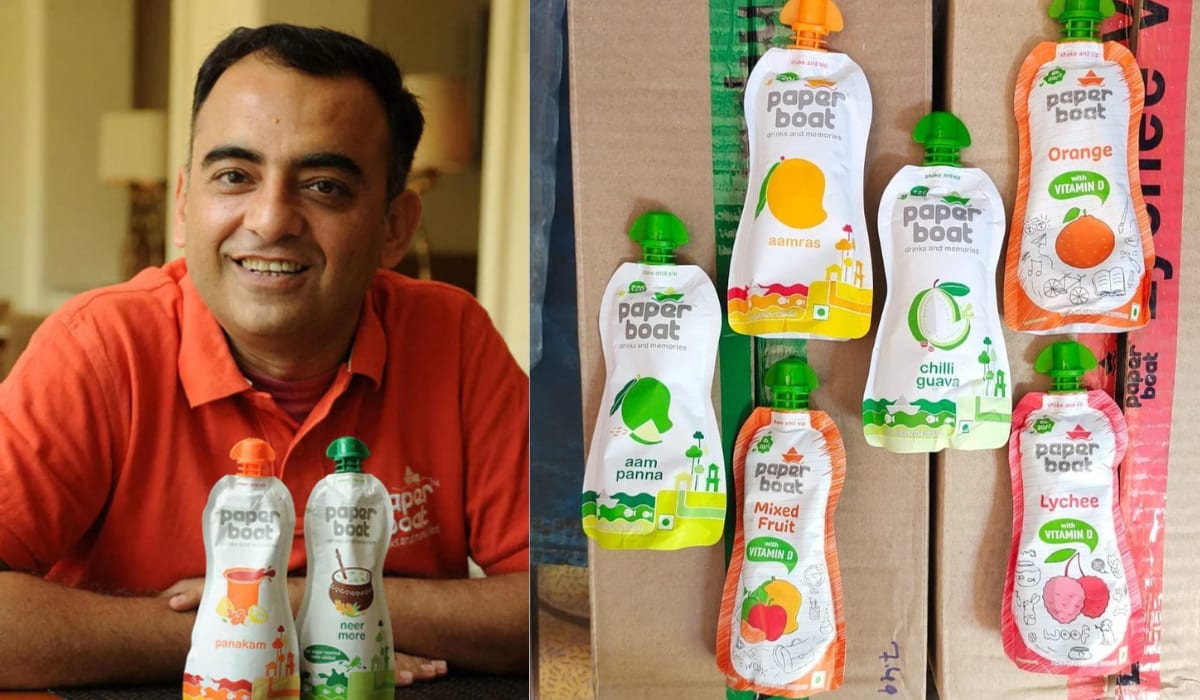
The Idea Hidden in Grandma's Kitchen
In 2009, Neeraj Kakkar teamed up with co-founders Suhas Misra, James Nuttall, and Bhargav Manoj to develop what would become Hector Beverages, the parent company of Paper Boat. Neeraj had worked for Coca-Cola India, where he saw multinational brands invest billions to promote fizzy drinks to a population that, deep down, still wanted something else. His observation was simple but remarkable. India was a country filled with taste memories, and almost none of them were available in a modern, safe, shelf-stable format. The corner vendor who made jaljeera with his bare hands was not someone to compete against; he was a tradition to celebrate. Paper Boat chose to celebrate it, one pouch at a time.
"We didn't want to make a beverage. We wanted to make a time machine — something that, the moment it touched your lips, sent you back to the house you grew up in."
Building a Brand in a Market of Giants
When Paper Boat launched in 2013, it entered one of the toughest consumer product markets in the world. On one side were Coca-Cola, Pepsi, and their long history of brand building. On the other were Dabur, Parle Agro, and ITC, companies with extensive distribution networks reaching every village market and railway station snack stall in India. By any standard measure, a startup entering this space with a pouch of aam panna was taking a huge risk. However, Paper Boat had studied its competition closely. Its true competition was not Coca-Cola; it was forgetting. The founders realized that Indian consumers still valued traditional drinks. The issue was not taste, but access, trust, and modernity. People had not stopped wanting aam panna; they just felt it was only available at home or from street vendors, not in a clean, branded package that they could carry or open at a party.
The strategic insight was surprising: instead of competing on price, distribution, or marketing budgets—areas where they would not succeed—they chose to compete on emotion. They would not sell hydration. They would sell the feeling of being eight years old again.
Key numbers at a glance:
- 2013 — Year of commercial launch
- 25+ unique traditional flavours in the portfolio
- ₹500 Crore+ revenue milestone reached
- 30+ countries where Paper Boat is now exported
A Flavour for Every Memory
The product range was a brilliant selection. Paper Boat didn’t create new flavors; it brought them back. Each drink in their lineup was picked not based on market research, but because the founders asked a simpler question: what did your mother make when you came home in summer? What did the temple hand out during festivals? What did your nani mix in a clay pot every Holi?
Their main range revived drinks that urban India had almost forgotten: Aam Panna, a classic summer drink made from raw mango and spices, Jaljeera, cool and tangy cumin-spiked water sold by street vendors in earthen cups, Kokum, a sour fruit adored along India’s Konkan coast but rarely found in packaged form, Thandai, a festive drink of rose and nut milk enjoyed during Holi and north Indian summers, Anar, refreshing pomegranate, and Chilli Guava, a popular street-side combination that's wild and addictive. The range stood out not just for its variety but for the authenticity of the recipes. Paper Boat collaborated with traditional food experts and home cooks to get the flavors just right. A jaljeera that tasted too “corporate” would be rejected by the very consumers they wanted to attract—people who remembered the real thing. There was no room for guesses. Memory is a strict judge.
The Pouch That Told a Story
If the liquid inside represented the essence of Paper Boat, then the packaging acted as a representation of the essence of Paper Boat. While rival brand packaging is generally dominated by photos of fit athletes and bubbles, the packaging of Paper Boat features illustrations that tell muted stories.The bags feature illustrations drawn by hand, such as children flying kites, grandparents telling stories under banyan trees or rain falling on metal roofs, or a single mango tree standing alone in a parched field. All of these are individual memories removed from stock photography and made visible through illustration. Each flavour had a separate set of illustrations, which gave the sense that as you drank, you were drinking your own folk tale. The packaging style, called Doypack (a flexible pliable stand-up pouch), is a significant departure from glass bottles and hard plastic containers, which are primarily found throughout the beverage market today. The packaging style felt softer and gentler than a commercial container and felt more personal and intimate with the consumer than a commercial container. The volume of beverage was smaller than a standard beverage volume appears to be thought of a single unhurried drink from childhood.
In addition to its softness and small size, the Doypack packaging offered practical benefits. The Doypack packaging is lighter than traditional beverage containers, allows for no refrigeration during transportation, and feels to consumers as something they can handle gently and with care — on a personal level, versus a commercial level. The writing on the packaging is quite possibly the most disturbin
Advertising That Made People Weep — Happily
The paper boat advertisement campaigns were legendary in the Indian marketing scene because of the extent to which they resonated with the target market in comparison to how much money they used to spend. In a period that celebrity endorsement, high-speed music and quick shots of products could be used to promote drinks, Paper Boat was redefining that strategy using stillness, gentle imagery, and poetry in their advertisements instead. Their initial digital movies were three to five minutes long and had no relation to advertising as it is understood by most people. As an example, they produced a movie in which a group of men in their 40s decided to go on a road trip back to their hometown and experience their childhood in that process. In one movie, a grandfather had the desire to know how to video chat with his grandchildren. This product did not feature much in these movies, but virtually all the audience would relate to it due to the emotional appeal of the movie. Their tagline of Drinks and a little happiness has been one of the most memorable brand lines in the history of Indian consumer packaged goods. This tagline was effective because of its inline modesty. It was not going to make your life any different or tell you that you were going to be better because you consumed Paper Boat products.; instead, it stated you may experience a moment of happiness if you drink a Paper Boat product. In a time when advertising is so laden with exaggeration, their use of restraint was an extremely effective strategy. On social media, Paper Boat's writing style was literary, friendly, and not "salesy." Their posts on Facebook and Instagram are very similar to a collection of prose poems.
"We never advertised our product. We gave people a reason to remember — and then put our name at the bottom of that memory."
Four Pillars of an Unlikely Empire
1. Authenticity Over Aspiration While most FMCG brands sold consumers a better version of themselves, Paper Boat sold them a truer version — the self they remembered. This built an emotional loyalty that price competition could never erode. When the product is someone's childhood, no competitor can undercut it.
2. Blue Ocean Positioning By creating the "ethnic traditional beverages" category, Paper Boat essentially had no competitors for years. They were not a better cola; they were a completely different conversation. The most defensible competitive position is one that only you occupy.
3. Premium for the People Priced slightly above mass market but well below premium, Paper Boat occupied the aspirational middle ground — accessible enough for everyday consumption, special enough to feel like a treat. This pricing sweet spot gave them a broad consumer base without diluting the brand's sense of specialness.
4. Storytelling as Strategy Every touchpoint — packaging, advertising, social media, even the company website — told a story. Paper Boat was not a beverage company that did marketing; it was a storytelling company that sold beverages. This distinction shaped every decision they made, from the font on their pouches to the cinematography of their films.
Milestones on the River
2009 — The Vision Begins Neeraj Kakkar and co-founders establish Hector Beverages, beginning years of R&D into traditional Indian drinks and the challenge of packaging them in shelf-stable, hygienic, modern formats without losing their soul.
2013 — Paper Boat Sails Commercial launch with the iconic Doypack pouches. Aam Panna and Jaljeera hit shelves in select cities. The brand finds immediate resonance with urban consumers who respond not just to the taste, but to the story it tells about who they are.
2015 — Investor Confidence Surges Paper Boat raises significant funding from Sequoia Capital and other investors, validating the emotional branding model. The company expands its flavour portfolio aggressively and begins building national distribution capabilities.
2016–2018 — National Expansion Distribution reaches 25+ cities. Digital advertising campaigns achieve millions of organic shares with zero celebrity spend. Paper Boat becomes the fastest-growing beverage brand in its segment in India, with cult following among millennials and urban professionals.
2021 — The Hershey's Chapter The Hershey Company acquires a majority stake in Hector Beverages, bringing Paper Boat under a global FMCG umbrella. The brand gains access to Hershey's formidable distribution strength while, crucially, retaining its nostalgic identity and voice.
Today — A Category Unto Itself Paper Boat is now available across India and in over 30 countries, serving the Indian diaspora worldwide. It has spawned an entire market of ethnic traditional beverages that simply did not exist before it arrived.
Rough Waters and Real Tests
The romance of the Paper Boat story had not been smooth sailing. The beverage business is one of the most challenging consumer goods - the cold chain logistics is inhumane, the shelf life of the natural-ingredient beverages is less than that of the synthetic competitors and distribution in a country of geographical complexity like India is a challenge that cannot be fully trained in a business school case study. The brand was also going through the eternal startup problem of expanding rapidly enough to make the investors trust it and at the same time head towards profitability. Paper Boat has been on a loss for a number of years, which is the bet that any brand in the aspirational FMCG category must make, hoping that brand equity would lead to the sort of pricing power that makes businesses viable. This was a bet that required nerve and vision in equal measure. Concerns were real whether nostalgia, how strong it could be, was a lasting platform. Was a brand created by memory going to be relevant in the next generation when new generations grew older who never had a personal experience of pre- modern India? The solution that Paper Boat found is to transform its narration, not to leave the past behind, but to transform it into a language that a person with Indian roots would be able to speak to, who had experienced the past personally or inherited it. Much of these pressures were solved with the Hershey acquisition in 2021, though new pressures were created. How do you remain real, hand-drawn and soft, now that you are a conglomerate across the globe? What do you do with a brand that has gained all its strength through being small and personal, when you now have a multinational machinery behind you? This is the conflict between independence and scale that will continue to define the next chapter of Paper Boat.
What Paper Boat Taught Indian Business
Paper Boat redefined some of the principles of Indian consumer brand-building, and the insights should be stored as well as their recipes. The first one is that it is better not to compete in the category, but to create categories. Any traditional analysis would have advised Paper Boat to compete in the juice or health drinks segment. Instead, they created their own segment traditional Indian ethnic beverages and dominated it before no one realized it was there. The second lesson is that authenticity is a product attribute and not a communication strategy. Paper Boat failed to position itself as an authentic one at the expense of flavour. The drink must have been right, not near right, but right as memory is, that is, in an irreversibly perfect manner. As long as the product itself has authenticity, marketing is virtually painless. Perhaps the most transferable lesson is the third one: emotion is the moat that a consumer brand can build the most. It is possible to duplicate technology, lower prices, and duplicate distribution but not the emotion a brand stirs in you. Paper Boat evoked people with feelings, and then was disciplined enough to preserve and enhance the feeling at each and every encounter. The fourth lesson, which is rather radical in the Indian context, is that there is so much, unexploited value in looking back. In a nation that is rapidly becoming modern, Paper Boat portrayed the fact that the traditional does not represent the antithesis of high quality - it can be its very definition.
The Diaspora Connection
One of Paper Boat's most moving success stories unfolded not in India but across oceans. Indian communities in the United States, United Kingdom, UAE, Singapore, and Australia found in Paper Boat something money rarely buys abroad: the exact taste of home. For a first-generation immigrant missing Indian summers, a pouch of aam panna purchased from an Indian grocery store in New Jersey was not a beverage — it was a passport. This diaspora loyalty gave Paper Boat a global dimension its competitors had never imagined. A brand built entirely around Indian memory became, paradoxically, one of the most internationally meaningful Indian consumer brands of its generation — proof that the more specific and rooted a brand is, the more universally it can travel.
"Some things are best kept just the way they were."
Paper Boat is, at its core, a love letter. A love letter to the India that existed before malls, before screen time, before the relentless pressure to modernize every corner of existence. It is a brand that asked, with remarkable commercial courage, whether there was space in the marketplace for tenderness.
The answer, sip by sip, pouch by pouch, memory by memory, has been a resounding yes.
In the end, Paper Boat proved that the strongest business idea is not always a disruption — sometimes it is simply a remembrance. And that the most powerful product you can sell is not a drink. It is a feeling that someone, somewhere, decided was worth preserving.