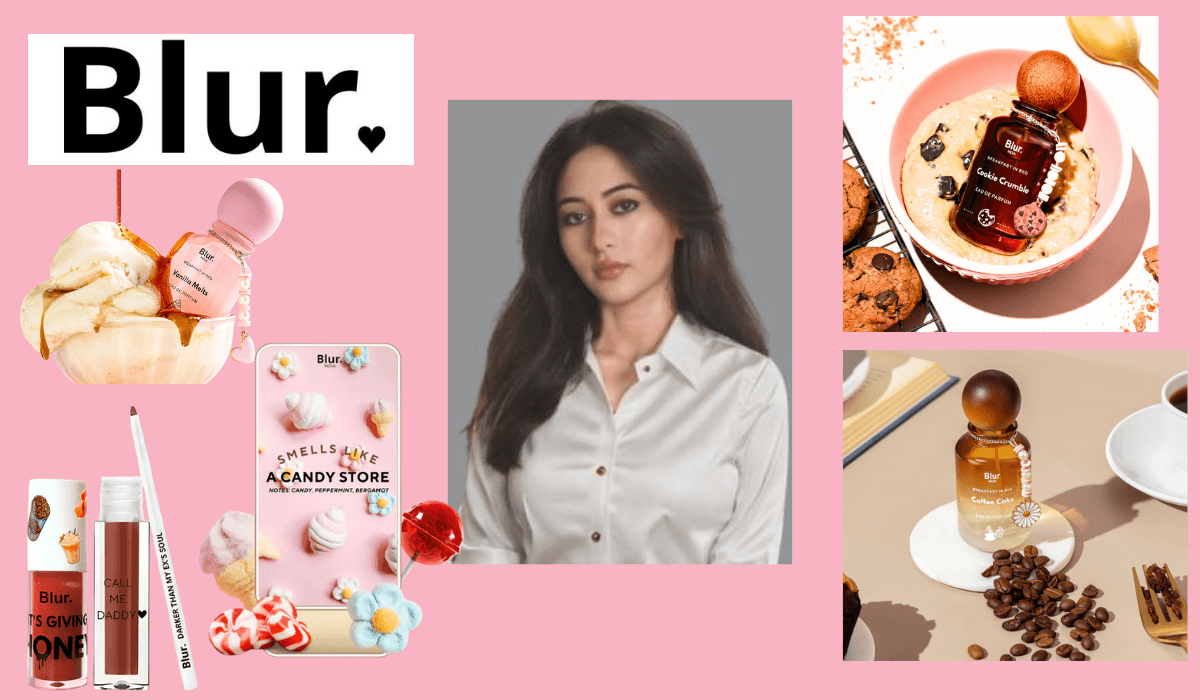
• Blur India was founded in 2022 by Riya Pant after she noticed Indian beauty brands were pushing one version of beauty that never reflected real Indian skin tones or younger consumers
• Instead of another traditional beauty company, Riya built a vegan, cruelty-free brand around fun and self-expression for young Indians
• A three-member lockdown startup that today has 50 people, Rs 10.6 crore revenue, 138 percent growth, and 8 lakh monthly visitors
Growing up watching beauty advertisements in India, Riya Pant noticed something that bothered her more over time than it did at first glance. Every campaign looked nearly identical. Flawless skin, heavily edited faces, models who all seemed to represent the same version of what beautiful was supposed to mean. The messaging was relentless: look better, cover more, get closer to perfect.
But the people she saw around her looked nothing like that. Indian skin tones are wildly diverse. Indian personalities are diverse. The way younger people were starting to think about makeup, as something playful and expressive rather than something corrective, was moving in an entirely different direction from what the brands were selling.
Riya had a degree in advertising from SP Jain Mumbai and years of hands-on experience in digital marketing. She understood both how consumers think and how brands talk to them. And she could see a gap that nobody was filling seriously: a homegrown Indian beauty brand that actually spoke to Gen Z consumers the way Gen Z consumers already spoke to each other.
Born During The 2022 Lockdown, With Three People And One Clear Idea
Blur India launched in 2022, during the lockdown, which sounds like an unlikely moment to start a beauty company. People were at home, spending more time on their phones, scrolling Instagram, watching beauty creators experiment with makeup looks in their bedrooms, and slowly forming a very different relationship with what beauty meant in their daily life.
Makeup was becoming less about hiding and more about expressing. Colour, mood, personality, humour. The products that were getting attention online were not the ones promising to make you look like someone else. They were the ones that felt fun to use and honest to talk about.
Riya started with three team members and a very specific vision: build a brand that is vegan, cruelty-free, community-driven, and genuinely different in how it talks to people.
One thing Blur India did that most beauty brands still struggle with was getting the product names right. Every product was given a name with a story behind it. Something with humour, something that made you smile during the thirty minutes you get for getting ready in the morning. Riya has talked about this specifically: the products are not just makeup, they are conversation starters. And that small decision had a compounding effect online.
When a product has a name that makes someone laugh or feel something, they talk about it. They share it. They screenshot it and send it to a friend. That kind of organic reach is almost impossible to buy with advertising budgets, but it is very possible to earn with the right product personality.
The packaging also followed the same logic. Visually distinct, colourful, and immediately recognisable while scrolling. In a world where beauty discovery happens on Instagram reels and YouTube tutorials, looking good in a flat lay is not vanity. It is a strategy.
Blur India did not grow as traditional beauty brands did. There was no heavyweight advertising push, no celebrity face tied to a launch, no expensive retail placement strategy from day one. The brand grew because real people used the products, genuinely liked them, and talked about them on the internet.
Beauty creators started posting reviews. Influencers started doing lip swatches and tutorials. People with smaller followings shared honest opinions that carried more weight than polished brand content. That ecosystem of real usage and real feedback is what pushed the brand from three people to over fifty, and from a small startup idea to Rs 10.6 crore in annual revenue as of March 2025.
The 138 percent year-on-year revenue growth and a 36 percent customer return rate tell the same story from two different directions: people were finding the brand, and then coming back to it. Both of those things have to be true for growth to mean anything real.
A lot of brands claim to stand for inclusivity and clean beauty. Blur India built its entire product line around it from the beginning, not as a marketing position but as an actual operating constraint. Every product is vegan. Every product is cruelty-free. The formulas, the textures, the packaging choices all came from customer inputs, not just internal decisions. The brand's website says it plainly: Team Blur wants to create a beauty community like no other.
That is not the language of a company trying to sound relatable. That is the language of a company that was built around community from the first day and has been consistent about it since.
Riya has also spoken about what comes next: physical stores, expansion into face and body care, and a deeper integration of in-store experience with the digital community already built online. The brand is not trying to become a mass-market giant overnight. It is trying to deepen a relationship with a specific kind of consumer who has always felt like an afterthought in the Indian beauty market.
Today, Blur India reaches 8 lakh people on its website every single month. It has gone from three people in a room during a lockdown to a team of over fifty. It is generating real revenue and growing faster than most brands in its category. And it is doing all of that without having raised a single round of external funding.
But the real story is simpler than the numbers. Riya Pant grew up watching a beauty industry that kept telling young Indian women what they should look like. She built a brand that asked a different question entirely: what if makeup was just supposed to be fun?
Turns out, a lot of people had been waiting for exactly that.
Quick Share