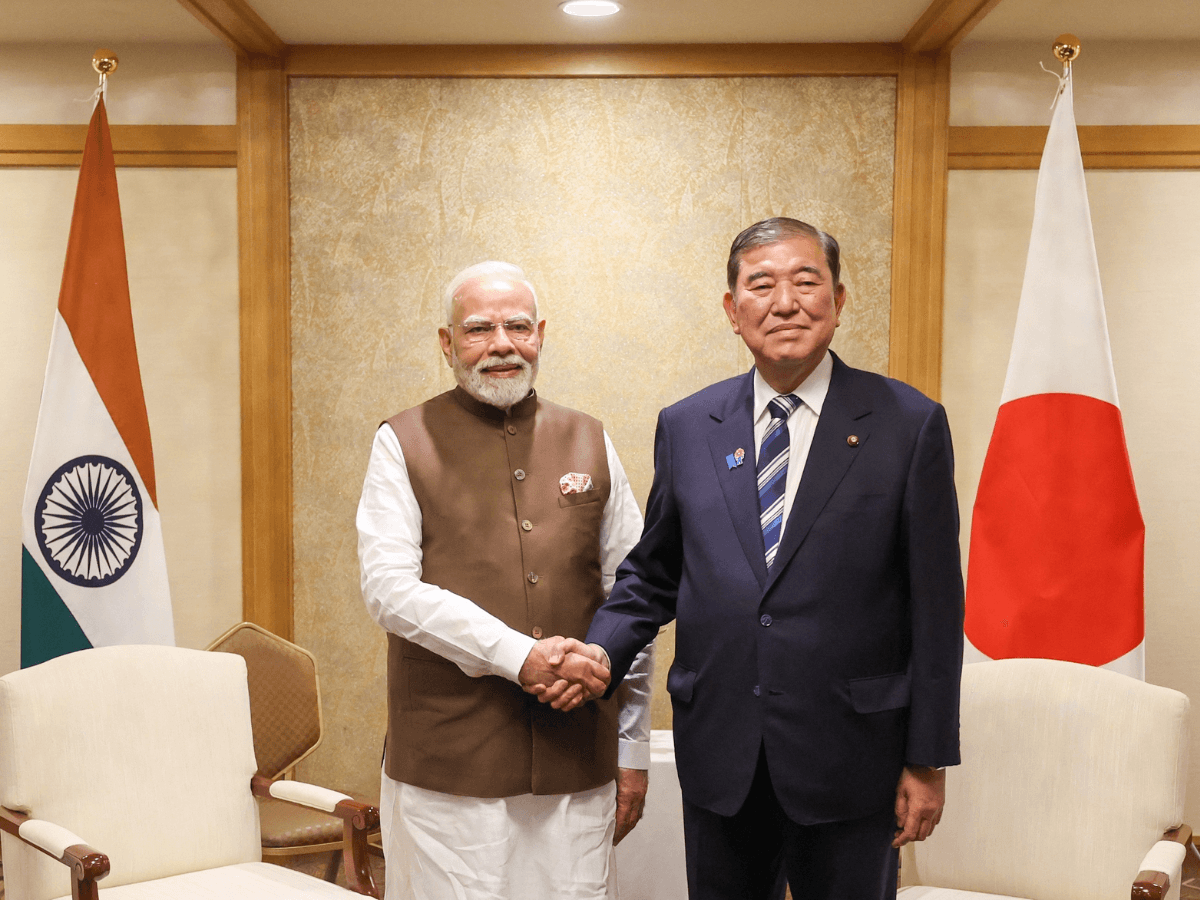
Japan has officially reached a total of over 270,000 crore rupees in foreign direct investment (FDI) in India — a significant achievement that goes beyond just money flowing in. With almost 1,400 Japanese companies working in India, the relationship between Japan and India is now strongly connected in areas like manufacturing, infrastructure, technology, sustainability, and new startups.
As the world's supply chains change and nations rethink their partnerships, the economic connection between India and Japan is becoming one of the most reliable and forward-thinking relationships in Asia.
Manufacturing is still the main reason Japanese companies invest in India. For many years, Japanese firms have set up big operations in areas like cars, car parts, heavy machinery, industrial equipment, and precise manufacturing. Big car companies like Toyota, Suzuki, and Honda have created strong production systems, supplier connections, and export centers in India. Maruti Suzuki, in particular, changed the way passenger cars are made in India and built one of the country's most successful manufacturing systems. These investments aren't just about building factories. They also brought in global production methods, efficient manufacturing techniques, and strong support for suppliers, which greatly improved India's industrial abilities.
Infrastructure working together has been a key part of this partnership. Japan has helped fund and support big projects like metro rail systems, industrial routes, and city development.
The Mumbai–Ahmedabad High-Speed Rail is a sign of strong trust and sharing of technology.
It is supported by Japanese money and knowledge, showing a long-term effort to better India's transportation system.
These infrastructure projects help move goods more efficiently, lower costs for businesses, and make India a stronger place for manufacturing.
As India works to build its own electronics manufacturing and semiconductor industry, Japanese companies are looking more closely at opportunities in advanced electronics, chip parts, and industrial automation.
With many global companies spreading out their supply chains, India is becoming a key choice for manufacturing.
Japan's strong technology and India's large size and workforce make a great combination for growth.
The Production Linked Incentive (PLI) programs have made India even more attractive for Japanese technology investments.
Sustainability is now a major focus in recent joint efforts between countries. Japan is helping India with projects related to clean energy, efficient power systems, and eco-friendly city development. Both countries are focused on reducing carbon emissions over the long term, and they are likely to work more closely on hydrogen energy, electric vehicle batteries, and smart electricity networks in the near future. This change shows that their partnership goes beyond business and is also about protecting the environment.
Japanese banks and financial institutions have expanded their footprint in India to facilitate corporate financing, trade, and cross-border investment flows.
Stable financial backing ensures smooth capital movement for Japanese companies operating in India and strengthens overall investor confidence.
Japanese investors, who used to focus on making big manufacturing products, are now starting to invest in India's startup scene. Their venture capital groups and corporate investment teams are looking at areas like fintech, deep technology, robotics, AI, mobility tech, and climate innovations. This shows a change from just building factories to working together on new and innovative ideas. Instead of only setting up production units, Japanese companies are now joining forces with Indian startups through strategic partnerships. As India's AI and tech environment grows, this area is expected to see a lot of development.
Japanese companies are now growing their businesses in more states across India, not just Delhi and Mumbai. They are setting up in places like Gujarat, Tamil Nadu, Karnataka, Maharashtra, Rajasthan, and Uttar Pradesh. To make their operations easier, Japan has created special areas called industrial townships and economic zones. This approach helps spread development across different regions and helps small local businesses connect with international markets.
The ₹2.7 lakh crore milestone is more than just a number — it shows strong confidence in India's future growth. Japan's investments are usually long-term and focused on building a strong ecosystem, making this partnership reliable even when the world is uncertain. Beyond money, India and Japan also agree on important issues like security in the Indo-Pacific region, making supply chains stronger, and working together on technology. These shared goals make their business relationship even better.
Japan's growing involvement in India leads to:
Better manufacturing abilities
Good funding for building infrastructure
Sharing of technology and training people
More job creation
Better connection with global supply chains
As India aims to become a major place for making things and coming up with new ideas, Japanese investments are likely to grow in both traditional and new areas.
The figure of ₹2.7 lakh crore is not the end goal — it's the start. With 1,400 companies already part of India's economy, the India-Japan partnership is set to be a key part of Asia's future growth.
Quick Share